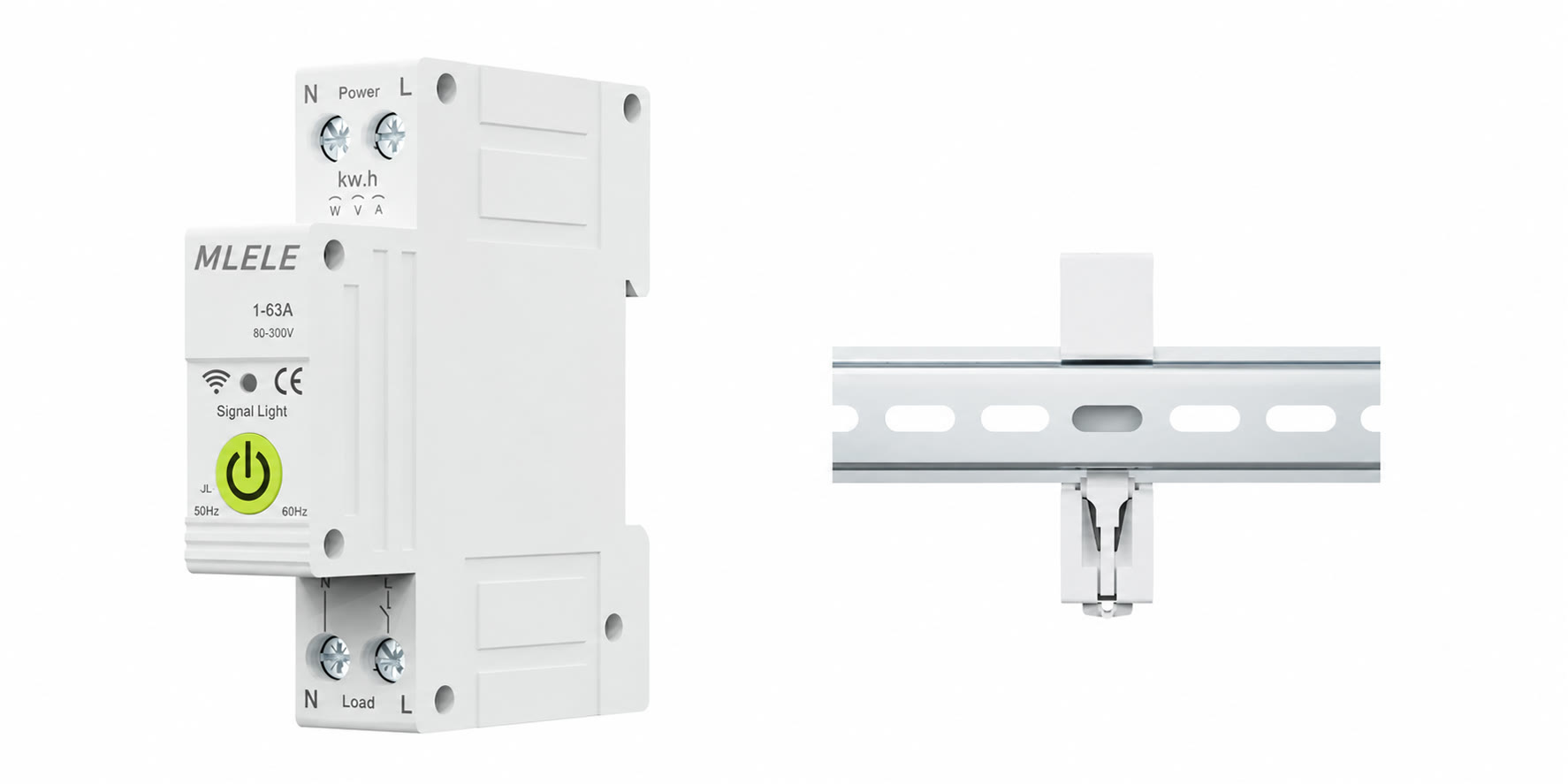
WENZHOU, ZHEJIANG, CHINA, November 17, 2026 /EINPresswire.com/ — In automated commercial power distribution and industrial process networks, motorized circuit breakers operating in electromagnetically noisy environments demand balanced micro-motor torque transmission, mechanical self-locking gear linkages, positive physical contact feedback, and high dielectric insulation withstand. In automated facilities, switching apparatus must execute repetitive remote commands while maintaining immediate hardware trip responsiveness during sudden overcurrent events. While commercial procurement teams frequently search for qualified Chinese remote control circuit breaker manufacturers to evaluate technical capabilities, practical engineering qualification depends on measurable mechanical linkage tolerances, electromagnetic compatibility (EMC) circuit architecture, and absolute physical trip priority. Headquartered in Liushi, Wenzhou, China’s core manufacturing center for low-voltage electrical technology, Zhejiang Mulang Electrical Technology Co., Ltd. (operating internationally under the brand MLELE) manufactures specialized low-voltage switchgear under quality management disciplines established since 2010. By integrating precision drive mechanics and certified protection into its remote control circuit breaker solutions, the enterprise equips international switchboard fabricators with switching units that bridge digital automation with verified mechanical safety.
Electromechanical coordination relies on matching a low-inertia micro-motor with a dedicated high-precision reduction gear train. The gear geometry is calibrated to multiply motor output torque, overcoming contact spring counter-forces during rapid closing actions without causing contact hesitation or surface micro-arcing. Once the contact bridge reaches the fully engaged position, the internal kinematic linkage locks mechanically, holding contact position without requiring sustained drive coil energization. For definitive contact status tracking, high-sensitivity mechanical micro-switches and optical position sensors couple directly to the primary contact rotation shaft. This hardware coupling generates instant electrical feedback signals confirming whether internal contacts are fully open or completely closed. In parallel, the onboard electronic controller incorporates an electromagnetic compatibility stage featuring transient voltage suppression (TVS) diodes, common-mode chokes, and optocoupler signal isolation. This hardware filtration suppresses high-frequency electrical fast transients (EFT) and voltage surges, allowing logic microprocessors to maintain computational accuracy and mitigate unintended switching actions during line fluctuations.
Dual Mechanical and Digital Contact State Verification
Operational safety across distributed building panels requires unambiguous synchronization between physical switch blades and remote digital telemetry. The motorized breaker mechanism links the external manual toggle lever directly to the internal contact carrier through a rigid mechanical pin. When internal contacts open, the external handle moves concurrently to the OFF position, providing maintenance crews with an immediate visual and tactile indication of contact state. Concurrently, internal auxiliary micro-switches update digital telemetry channels linked to centralized building management dashboards and paired mobile software applications. This bidirectional mechanical-electrical verification resolves the hazard of false status reporting, where software interfaces might display a closed circuit while mechanical linkages remain jammed, or indicate an open circuit while contacts continue conducting current. The verified physical gap established in the open position provides galvanic separation for personnel servicing downstream electrical circuits.
Hardware-Level Thermal-Magnetic Trip Priority Over Software Commands
Protecting branch electrical circuits dictates that physical protection elements must operate with absolute mechanical authority over remote electronic controls. The circuit breaker incorporates standardized bimetallic thermal strips for long-time delay overload protection alongside high-speed electromagnetic solenoids for instantaneous short-circuit protection, delivering certified breaking capacities of 4.5kA and 6kA. If a short-circuit fault occurs while a remote closing signal is active, electrodynamic forces inside the trip solenoid actuate the mechanical trip latch directly. This physical release separates the moving silver-alloy contacts within milliseconds, regardless of whether the motorized gear mechanism is currently energizing or receiving a remote hold signal. The resulting electrical arc is drawn into a multi-plate de-ionizing arc chute that divides, cools, and extinguishes the arc plasma. Crucially, in scenarios involving auxiliary power interruption or wireless communication disconnection, the autonomous thermal-magnetic mechanism retains direct mechanical control over contact opening, providing independent hardware trip capability under all operational circumstances.
Thermal Endurance and Operational Longevity Under Full Load Limits
Deploying remote switching devices in demanding commercial and industrial environments demands sustained thermal-dynamic stability. MLELE remote-control breakers are calibrated to maintain steady mechanical trip thresholds and dielectric insulation across an ambient operational temperature boundary from -5 deg C to +40 deg C, supporting reliable performance under a 24-hour daily average operating temperature of +35 deg C. The current-carrying path incorporates high-conductivity electrolytic copper conductors tipped with high-density silver-nickel alloy contact buttons that exhibit low dynamic contact resistance. Even under repetitive switching cycles across inductive motor loads and capacitive lighting circuits, these contact geometries maintain micro-ohm interface resistance, preventing localized thermal buildup. Rigorous factory endurance testing subjects the complete motorized assembly to thousands of full-load operational cycles, confirming that gear teeth, drive linkages, and contact return springs retain structural alignment without developing mechanical binding.
To accommodate varying control voltage architectures across commercial buildings, the motorized drive system offers modular control voltage selections covering AC 220V, AC 110V, and DC 24V inputs. This input flexibility enables direct interfacing with existing building programmable logic controllers (PLCs) or low-voltage auxiliary power supplies without requiring additional step-down transformers. Routine burn-in screening on micro-motor drives verifies that gear torque profiles and current draws remain stable across allowable operational voltage variations.
Differentiated Motor Sub-Assembly Testing and Certified Production
Manufacturing precision electromechanical gear mechanisms requires controlled sub-assembly processes and routine run-in verification. At its production facilities in Liushi, MLELE tests motorized actuator sub-assemblies for smooth torque delivery and auxiliary switch feedback across full operational strokes under a certified ISO 9001 quality management framework. Prototype drive units are assembled for technical evaluation within approximately 7 days, with commercial production completed within 20 to 30 days. Export consignments are backed by routine inspection records verifying contact travel limits and operating timing curves, complemented by official CCC type-test certificates, CE declarations of conformity, and RoHS compliance documentation.
Specifying remote-control circuit breakers with verified mechanical interlocking and autonomous trip priority reinforces long-term operational stability across automated distribution networks. Electrical project consultants, panel builders, and automation distributors can review complete mechanical specifications, download wiring schematics, and request factory evaluation units by visiting the official international portal:
Zhejiang Mulang Electrical Technology Co., Ltd.
MLELE
Visit us on social media:
Facebook
Legal Disclaimer:
EIN Presswire provides this news content “as is” without warranty of any kind. We do not accept any responsibility or liability
for the accuracy, content, images, videos, licenses, completeness, legality, or reliability of the information contained in this
article. If you have any complaints or copyright issues related to this article, kindly contact the author above.

Media gallery