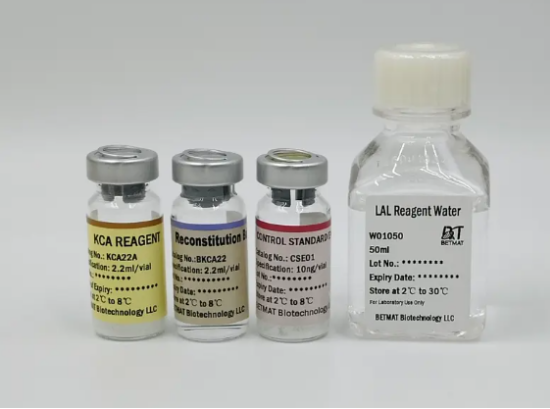
DOVER, DE, UNITED STATES, June 9, 2026 /EINPresswire.com/ — The pharmaceutical and medical device manufacturing industries face stringent regulatory expectations to guarantee the pyrogen-free status of injectable therapies, vaccines, and implantable products. Deploying a reliable, highly accurate method like a Leading Kinetic Chromogenic LAL Reagent For Quantitative BET Applications is essential to meet global compliance standards. In the arena of Bacterial Endotoxins Testing (BET), precision and reproducibility are critical parameters for modern quality control validation, as endotoxins can trigger severe pyrogenic reactions, including fever and shock, in humans. To address these industry-wide demands, BETMAT provides advanced testing solutions designed to deliver superior accuracy and streamline laboratory workflows.
Biochemical Mechanisms of the Kinetic Chromogenic Method
The kinetic chromogenic endotoxin assay developed by BETMAT represents a significant technological refinement over traditional gel-clot visual limits by quantifying the underlying biological cascade. At the core of this reaction is a highly sensitive, multi-step enzymatic zymogen system derived from the circulating blood cells of horseshoe crabs, known as Limulus Amebocyte Lysate (LAL). When Gram-negative bacterial endotoxins introduce lipopolysaccharides (LPS) into the test environment, they bind to and activate Factor C, a specific serine protease zymogen within the lysate.
Once activated, Factor C enzymatically converts Factor B into its active form, which subsequently activates the proclotting enzyme. In a classic gel-clot or turbidimetric test, this active clotting enzyme cleaves coagogen to form a gel matrix.
In contrast, the BETMAT kinetic chromogenic formulation alters this endpoint by introducing a co-lyophilized lysate composed of LAL and a synthetic peptide substrate. This substrate contains a specific amino acid sequence tailored to the cleavage site of the clotting enzyme, covalently bonded to a chromophore molecule, para-nitroaniline (pNA).
The active clotting enzyme hydrolyzes the synthetic substrate, releasing free pNA into the solution. This process turns the mixture from colorless to an faint yellow. Automated kinetic microplate readers continuously measure this reaction by recording changes in absorbance at a wavelength of 405nm under a constant temperature of 37 degrees Celsius.
The rate of color formation correlates directly with the endotoxin concentration in the sample: higher endotoxin levels accelerate the reaction, thereby shortening the onset time required to reach a preset absorbance threshold.
Analytical Kinetics and Standard Curve Principles
Quantification via the kinetic chromogenic assay is governed by the precise mathematical relation between the endotoxin concentration and the reaction velocity. Automated software monitors the absorbance profile of each well at short, regular intervals throughout the incubation cycle. The core analytical metric utilized is the onset time, defined as the exact time required for a sample mixture to achieve a predefined optical density threshold above the baseline value.
A direct mathematical correlation exists where the logarithm of the onset time is inversely proportional to the logarithm of the endotoxin concentration. Before evaluating unknown specimens, laboratories run a series of certified Reference Endotoxin Standards (RSE) or Control Standard Endotoxins (CSE) to generate a multi-point calibration curve.
The analytical parameters of this curve are tightly regulated by compliance protocols: the absolute value of the correlation coefficient (|r|) must be greater than or equal to 0.980 to satisfy official pharmacopeial guidelines. The broad linear dynamic range of the BETMAT KCA reagent allows quality control personnel to quantify trace contaminants and high concentrations within the same assay layout, minimizing operator-induced variability.
Interferences, Mitigation, and Matrix Compatibility
A significant technical hurdle in routine Bacterial Endotoxins Testing is sample-induced interference, which presents as either the inhibition or enhancement of the LAL enzymatic cascade. Complex biological matrices—such as highly concentrated proteins, cell culture media, lipid emulsions, and low-molecular-weight chemical entities—can alter the pH, chelate essential divalent cations like Mg²⁺ or Ca²⁺, or non-specifically denature the constituent enzymes of the LAL reagent.
To counteract these phenomena, the formulation is engineered with robust matrix properties designed to maintain an optimal neutral pH environment and preserve necessary divalent cation concentrations without triggering false-positive auto-activation.
When validating complex product matrices, quality control protocols mandate sample pretreatment. Complex samples often require precise dilution, pH adjustment within a 6.0 to 8.0 range, or mild heating to eliminate interfering elements like proteins or chelators before introducing the testing reagent.
For an assay to be considered valid and free from interfering factors, the measured recovery of the added endotoxin must fall strictly within the limits of 50% to 200% during spike recovery studies. If a sample falls outside this range, the high sensitivity of the BETMAT reagent allows laboratories to apply further non-interfering dilutions up to the Maximum Valid Dilution (MVD), neutralizing sample interference while staying within the regulatory limit of detection.
Key Product Features and Performance Advantages
Engineered by BETMAT Biotechnology LLC for superior precision, sensitivity, and reliability, the KCA product portfolio exhibits critical technical features that ensure analytical rigor and operational efficiency:
High Sensitivity and Wide Dynamic Range: Capable of reliably detecting endotoxin levels from 0.005 to 50 EU/mL, ensuring its suitability for a wide array of samples, from highly potent drugs to medical device extracts.
Robustness Against Interference: The formulation is optimized to withstand common sample matrix inhibitors, reducing false negatives or positives and enhancing data integrity.
Standardized and Ready-to-Use Format: Reagents are supplied in standardized lyophilized formats, ensuring lot-to-lot consistency, simplifying laboratory workflows, and minimizing operator error.
This product ecosystem functions seamlessly alongside auxiliary testing consumables, including control standard endotoxins (CSE) and verified endotoxin-free laboratory plastics, ensuring that the background baseline remains clear of external contaminants.
Broad Applications in Bioprocessing and Industry Quality Control
The application of quantitative BET technologies extends across multiple critical stages of the therapeutic manufacturing and medical device lifecycle. Within upstream and downstream bioprocessing, in-process testing relies on the kinetic chromogenic assay to verify the purity of water-for-injection (WFI) systems, bulk intermediates, and active pharmaceutical ingredients (APIs). Early quantification ensures that any upstream bioburden or raw material contamination is addressed before final formulation, protecting capital-intensive downstream purification columns from irreversible endotoxin binding.
For instance, manufacturers of life-saving injectables like insulin utilize this quantitative method to validate that both final lots and raw material buffers remain strictly below regulatory limits. For human and veterinary vaccines, such as those for influenza, the high sensitivity of the assay prevents adverse inflammatory reactions in recipients.
For medical device manufacturers, the assay is applied to surface extraction and rinse fluid monitoring per standard frameworks to ensure the safety of invasive or implantable devices like cardiac stents, pacemakers, and urinary catheters. Furthermore, manufacturers of hemodialysis filters rely on this method to confirm that components do not leach endotoxins into dialysate fluids, which would cause dialysis fever in patients.
Regulatory Alignment and Strategic Quality Assurance
Adopting quantitative BET methodologies requires data compliance with international quality frameworks. The data streams generated by kinetic spectrophotometers provide continuous objective measurements, eliminating the user-dependent subjectivity associated with manual tube-inversion techniques.
BETMAT KCA reagents are fully validated under strict cGMP guidelines to meet the requirements of global pharmacopoeias, including the United States Pharmacopeia (USP) and European Pharmacopoeia (EP) 2.6.14, providing complete traceability and confidence for regulatory submissions.
For comprehensive technical datasheets, standard curve validation guides, and specific application protocols regarding quantitative testing configurations, please refer to the detailed documentation available on the official company website: https://www.betmatbio.com/.
BETMAT BIOTECHNOLOGY LLC
BETMAT BIOTECHNOLOGY LLC
+86 18101764785
sales@betmatbio.com
Legal Disclaimer:
EIN Presswire provides this news content “as is” without warranty of any kind. We do not accept any responsibility or liability
for the accuracy, content, images, videos, licenses, completeness, legality, or reliability of the information contained in this
article. If you have any complaints or copyright issues related to this article, kindly contact the author above.

Media gallery